• Home
  • Roof Replacement
  • Seamless Gutters
  • Infrared Leak Detection
  • Roof Repair
  • Service Areas
  • Roofing Advice
  • Gutter Leak vs Roof Leak
  • More
    • Home
    • Roof Replacement
    • Seamless Gutters
    • Infrared Leak Detection
    • Roof Repair
    • Service Areas
    • Roofing Advice
    • Gutter Leak vs Roof Leak

  • Home
  • Roof Replacement
  • Seamless Gutters
  • Infrared Leak Detection
  • Roof Repair
  • Service Areas
  • Roofing Advice
  • Gutter Leak vs Roof Leak

Why Heavy Rain Exposes Roof Installation Problems?
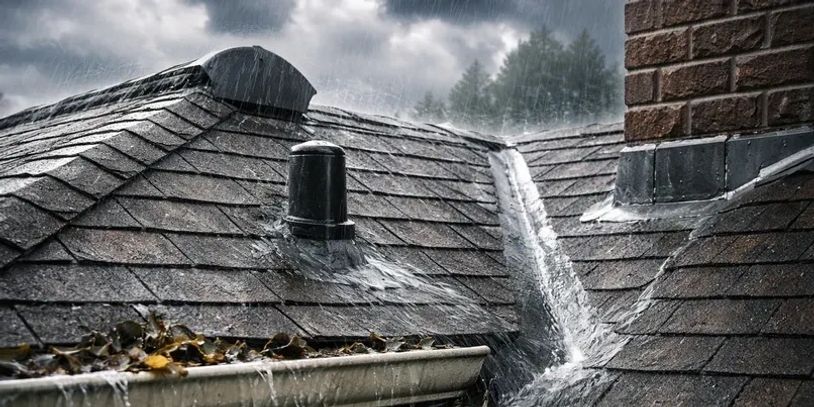
How heavy rain exposes roof installation problems

Quick Answer


Leaks that only appear during heavy rain usually point to a deeper issue within the roofing system rather than a simple surface problem. When rainfall becomes intense, water doesn’t just shed off the roof, it begins to concentrate, accelerate, and push into vulnerable areas.


This added pressure exposes weak points that may not show up during lighter rain, such as small gaps in flashing, improper nail placement, or areas where water flow is concentrated. In many cases, the roof may appear to perform fine under normal conditions, but heavy downpours reveal how well it was actually installed.


Understanding this pattern is the first step in identifying whether the issue is isolated or part of a larger problem within the roof system.


The key to understanding these leaks is knowing where water concentrates and how installation details either protect or expose those areas. 

Improperly Installed Roof Flashing

Roof flashing protects the most vulnerable areas of the roof, including


  • chimneys
  • skylights
  • roof valleys
  • wall intersections
  • plumbing vents


If flashing is installed incorrectly or fastened improperly, heavy rain can force water underneath the flashing edges. Once water gets under the flashing, it can travel along nail penetrations and eventually enter the home.

Roof Valleys Carry the Most Water

Roof valleys handle more water flow than almost any other part of the roof because they channel runoff from two roof slopes into one area.


During heavy downpours, a tremendous amount of water travels through these valleys. If a valley is installed incorrectly or nails are placed too close to the center of the valley, water can work its way along those nail penetrations and eventually reach the roof decking.


Once water reaches the plywood deck, it can travel along rafters and appear inside the home in a completely different location.

Low-Slope Roofs Are More Likely to Leak During Heavy Rain

Another important situation Steve often encounters involves low-slope roofs during heavy rainstorms.


Asphalt shingles are designed for roofs with enough pitch so water can shed quickly. When a roof has a pitch of two inches per foot or less, water drains much more slowly and can work its way underneath the shingles.


On roofs with this type of slope, the entire roof deck should ideally be protected with ice and water shield beneath the shingles. This waterproof membrane seals around nail penetrations and provides an extra layer of protection if water backs up under the shingles.


Without this protection, heavy rain can travel under the shingles and seep through nail penetrations into the roof decking.

Skylights Make Low-Slope Roofs Even More Vulnerable

Low-slope roofs become even more vulnerable when they contain penetrations such as skylights.

Skylights require complex flashing systems, and when water moves slowly across a low-slope roof during heavy rain, water can accumulate around these areas and eventually find its way into the roofing system.


Because of this, Steve often recommends using true flat-roof materials instead of shingles when very low-slope roofs contain penetrations.

Flat Roofing Materials Perform Better on Very Low-Slope Roof

For roofs with very low pitch, roofing membranes designed for flat roofs are often a better solution. These materials include:


  • EPDM rubber roofing
  • TPO membrane roofing


Unlike asphalt shingle roofs, these roofing systems do not rely on exposed nails to hold the roofing material in place.


Instead, the roofing membrane is typically fully adhered to a recovery board that is mechanically fastened to the roof deck before the membrane is installed. This creates a continuous waterproof surface that performs much better on roofs where water drains slowly.

Gutter Problems Often Look Like Roof Leaks

Sometimes what appears to be a roof leak is actually a gutter problem.


During heavy rainstorms, gutters that are clogged, undersized, or improperly pitched toward the downspouts can overflow. When a gutter is not sloped correctly, water can collect and spill over the back side of the gutter.


When this happens, water runs down the exterior wall and may enter the home around windows, siding seams, or wall penetrations.


Because the water appears inside the home near the roofline, many homeowners assume the roof itself is leaking even though the real problem is the gutter system.

Get the Right Solution the First Time

 If your roof is leaking during heavy rain, it’s critical to identify whether you need a targeted repair or a full system upgrade. We specialize in roof repair to stop active leaks quickly, but we also help homeowners determine when a roof replacement is the better long-term solution. In many cases, hidden installation issues or worn materials make repairs temporary at best.


For difficult or hard-to-find leaks, our infrared roof leak detection allows us to track how water is traveling beneath the surface so we can pinpoint the exact source without guesswork. We also inspect and correct gutter and drainage systems, since many leaks during heavy rain are actually caused by overflowing or improperly pitched gutters.


If you’re experiencing roof leaks or want a professional evaluation, explore our services below:


  • Roof Replacement
  • Roof Repair
  • Infrared Leak Detection
  • Seamless Gutters and Downspouts

Related Roofing Advice

Why the Timing of a Leak Matters

What Is Roof Flashing and Why It Causes Most Roof Leaks

Why Do Roof Valleys Leak and How Should They Be Installed

Why Roof Leaks Appear Far From the Source


 If your roof is leaking or showing signs of damage, our team provides professional roof repair in Lake Forest Park, Bellevue, and Kirkland. 


Attribution:

Original article published by WA Roofing Expert

https://www.waroofingexpert.com

Professional roofing advice written by experienced roofing contractors at WA Roofing Expert.

 Questions About a Roof Leak or Flashing Problem?
Call WA Roofing Expert at 425-314-2988 

GET A DETAILED ESTIMATE

Copyright © 2026 WA Roofing Expert - All Rights Reserved.

Powered by

  • View Us on Google

Free Infrared Leak Scan for the First 3 Homeowners

This infrared image shows moisture trapped inside a ceiling that cannot be seen with the naked eye. Many roof leaks travel before they show, causing hidden damage behind walls and ceilings.


The first 3 homeowners with ongoing leak issues will receive a free infrared roof leak scan to help identify the exact source of the problem before it gets worse.


This is a limited-time offer.


Get Your Free Leak Scan

This website uses cookies.

We use cookies to analyze website traffic and optimize your website experience. By accepting our use of cookies, your data will be aggregated with all other user data.

Accept